Friday, 27 February 2009

Intrepid traveller... Searching Syria

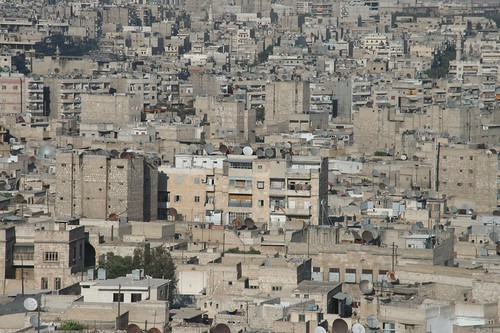
Syria is a land of contradictions. While the government heavily censors web access (Facebook is banned, as is Blogger but I've managed to break through via Mozilla Firefox) the streets around Aleppo - the country's second largest city - are littered with lingerie stores selling an array of neon coloured undergarments that would put Amsterdam's Red Light district to shame. Every house, flat or shop boasts a satellite dish - Aleppo from the air resembling a pock-marked teenager - with said-satellite television offering more than a hundred (graphic) Arabic porn channels. And yet of the few women seemingly granted 'street privileges,' all are covered from head to toe in floor-length overcoats and veiled burkas that shroud even their eyes from view. So just who is wearing the lime green knickers?

Crossing the border on Thursday - border control yet another example of Middle Eastern inefficiency where no fewer than six men are employed to do the work of one, as another half dozen look on smoking cigarettes and sipping tea - we spent the afternoon roaming through the souks. After buying a small child's weight in scarves, Boyfriend dragged me out of the musty, smelly mayhem (where lamb carcases hang in the open air next to stalls selling dried fruit, nuts and sweating cheeses) and back to our hotel.

On Friday, Islam's day of rest, we walked the deserted streets to the historic citadel. Aleppo is another city claiming the title of 'oldest inhabited city'; it's citadel a testament to the notion that at one time, the city was in fact quite grand. The hill, on which the ruins of a fortified medieval palace (c.1100 CE) now stand, is claimed to date back to the 3rd century BC. Sadly restoration of the site has slowed to a near standstill. The ruins reek of urine and the pathways and remains lay covered in people's rubbish. With most of the visitors local Syrians - we were among perhaps a handful of Westerners visiting with the masses - it's hard not to chastise the locals for their lack of pride in their great city's monument.

Looking out over the high limestone walls, across the great expanse of Aleppo - the city spanning 16,000 km² with a population just under 5 million - our 360 degree view was bleak. Searching for areas of vegetation left us wanting, with the only dots of green the patches of dying grass amid decaying buildings. It seems that repair and restoration is an unfamiliar concept to 'modern' Middle Easterners. Decrepit buildings are simply propped up with wooden sticks and new constructions are left incomplete to avoid paying the full amount of home owner tax. Even the 'grand' government building at the base of citadel hill had broken windows and debris spilling out into it's courtyard.

It baffles the mind as to how the same region that founded the civilised world, where impressive structures were built to stand the test of thousands of years, can now be so backward. Dust and dirt is everywhere and no one seems the least bit concerned. Travelling through India, Peru and even parts of South East Asia I found the same, poor people living amongst their own squalor. It costs nothing to pick up the rubbish strewn over your own balcony, roof top and outside your own front door - nothing except time; and time is certainly something the people seem to have in abundance.

Sorry, but my (independent/liberated/Western) female mind can't help but judge.


Note: Top pic courtesy of Bugbog.com, rooftops thanks to Flickr.com


Wednesday, 25 February 2009

Intrepid traveller... Rub-a-dub-dub

We're in Gaziantep, another of the supposedly 'oldest inhabited cities in the world,' and this morning I was scrubbed down by one of it's oldest residents.

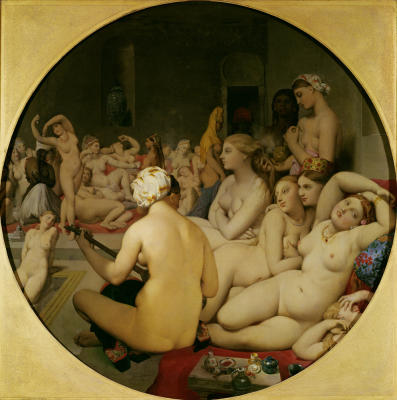
At four-foot-nothing and wearing little more than a bra and shorts, my masseuse was otherwise the quintessential Turkish grandmother - albeit armed with a sanding mit, loofah and shampoo. For a country so consumed with covering up, the ladies working at Naib Hamami (Gaziantep's historic bath house built in 1640 at the base of the city's citadel) were all for stripping down.

Speaking no English, they shooed Chloe and I through to a marble changing room (complete with wooden cubicles and the odd Turkish rug), where we donned our bathers and flip flops, and led us by the hand through a doorway fit for hobbits and into the first of our washrooms.

I was sat on a metal stool as grannie doused me in hot water. She then scuttled me across to a large heated stone alter where I was made to lie down like Jesus on the cross, staring up at a ceiling spotted with star-shaped holes. This was apparently for 'quiet time' and to give our pores a chance to really open up... Chloe and I giggled continously enjoying the madness of our latest endeavour. After five minutes - and some static instructions in Turkish - my little lady brought me into the massage room.

The next 45 minutes were truly something. I lay on the marble floor, was scoured to burning point and rubbed and scrubbed in areas previously only visited by boyfriends and waxing ladies. When she straddled my recumbent body kneeding my breasts like dough I knew I was getting the Royal Treatment. Desperate not to start laughing I closed my eyes, but I couldn't quite get over the vigour with which this tiny person was scrubbing me up and down. The clumps of dead skin outlining my body the only reminder of what exactly I was there for.

After the scrub she took to my hair, emptying half the contents of a bottle of Pantene 2-in-1 onto my scalp; the other half she used on my body for the final rub down. Not once skerrick of my body was left uncleansed. I'd reached spa nirvana.

Not for faint hearted... more for those seeking a little bit of crazy: haman is undoubtedly my favourite Turkish experience.


Note: Top image courtesy of I feel it too, Naib Hamami thanks to www.suleymanucar.com

Monday, 23 February 2009

Intrepid traveller… Cappadocia

11 hours and 10 kilometres from our destination of Göreme, our overnight bus kicked us off at a small depot in the middle of nowhere, amongst yet more snow. Little explanation was given other than our bus was no longer travelling into Göreme – at a whim, the driver was heading straight to the next town.

Bag-laden we huddled together in the cold (offers for us to sit in the smoke filled reception room not-so-graciously declined) as we waited for the next coach to come along. It was 7am and the coach was due for 8am, Turkish-time. As we’ve come to realise the clocks in Turkey tick to their own beat, so our guide rang our hotel to see if they might collect us. Thankfully they were awake and answered her call.

Göreme is a small town in Cappadocia – a historical and unique area of Asia Minor known for its fairy chimneys (conical rock formations formed after volcanic eruptions more than 8 million years ago). Naturally porous and easily shaped, these conical hills became homes for the people of the area. Digging out the insides they were able to create cave dwellings that have stood for thousands of years.

Most of the cave houses have now been abandoned – their foundations finally crumbling – and those which are still occupied are owned by the government, leased to families and passed down the ancestral line. We were lucky enough to be invited into one such home yesterday, for tea and some soft-selling. On a walk through the town we bumped into Haditha, a local in her late fifties who moved to Göreme 28 years ago when she married her husband. It was his family home that she welcomed us into, showing off her 7-year-old granddaughter as well as her handmade scarves, etc. As nothing in Turkey is ‘for free’, Anna and Glen took one for the team and bought one of her handsewn pillow cases. Haditha told us it was real Zebra skin… although its leopard-like print made us question her translation.


Not ones for settling on simple caves above ground, the ancient people of the region also dug below, with more than 40 underground cities created from around 2,000 BC. These cave cities protected their inhabitants during war time, even housing livestock. We visited the biggest and deepest, Derinkuyu – with eight floors and extending to a depth of approximately 85 metres.

Tomorrow we continue to travel eastwards, to Gaziantep, on our way towards Syria.

Note: Sadly, my trusty Dell laptop (c.2003) has suffered a fatal blow – the connection to the main power supply no longer ‘connecting’ – so posts from now on will revert to using stolen photos from net (top pic thanks to Jim Shannon's photostream and Derinkuyu caves courtesy of Encounterturkey.com). I’m devastated; mainly because now I have to lug around 3-odd kilos of dead weight.

A darling addition...

Just past midnight on Saturday morning, as I lay cuddled-up to Boyfriend in our wood hut in Olympos, I woke - somewhat disorientated - to the sound of my mobile ringing. Before we left London I made sure to top up my credit, awaiting this phone call.


Sure enough it was news that my (middle) sister had given birth to a beautiful baby girl. A new sister for almost 3-year-old niece - and the fourth of my nieces - this little cherub enters a very female-focussed family. It will be a few years until I start a family of my own, but seeing my sisters with their babies only further endorses motherhood.

Only a few more weeks until I get to meet her (and her two-week old cousin) in person... My mission now: to find some gold, frankincense and mir for the little darlings.

Saturday, 21 February 2009

Intrepid traveller... Man make fire

We spent the night in Olympos, a small bungalow 'community' slightly off the beaten track. Once a great port town, established in the Hellenistic period, now it's kind of a tourist trap for those wanting to chill out on an isolated pebbled beach, smoke shisha and disappear for a while.

According to our itinerary, halfway up Mount Olympus (one of the twenty or so Mount Olympos' throughout the old Roman Empire) there are holes in the mountain that spontaneously ignite with flames: the area named Chimera after a mythical Greek fire breathing creature. Usually seen at night, Chloe suggested the 'legend' more impressive than the reality (apparently a thousand years ago ships could see the flames from the sea) so we skipped the 15 lira evening tour bus and instead chose to hike there this morning. We're taking our first overnight bus tonight so we were all keen for a bit of strenuous activity.

The sun shone brilliantly so the 12km walk was actually a pleasure - except for the part where we had to wade barefoot through a pebbled creek bed and sunk in quicksand.

But it was worth it. We climbed from the base up a good 800 metres and there in the clearing were a dozen or so open flames - like an abandoned campsite, although these barbeques have been burning for thousands of years.

While the flames were little, the boys were able to amuse both themselves and others by dousing the fires with water and reigniting them using various sticks and dried grasses they found. This activity wore on for a good hour or so before Chloe and I dragged them back down. Although the fact that two tour buses had arrived with others wanting to play with the flames helped our cause.

On the beach below Mount Olympus

The smile on Boyfriend's face was priceless. On the way home he even got to skim pebbles across the creek... fire and rocks made for one satisfied Homosapien.

Thursday, 19 February 2009

Intrepid traveller... Snow bunny

As I type I lie cocooned under three heavy woollen blankets, in the white tiled bedroom of our hotel in Dalyan. The temperature outside is just a fraction above freezing and rain has been teeming intermittently all afternoon.

Thankfully, the electricity is back on. It enjoyed a brief interlude a short while ago, as it seems that everything here is on a timer, and our visit (and subsequent desire for warmth and running water) just isn’t in the winter schedule. We’re all eagerly awaiting the hot water – set to turn on at 8pm – although I don’t fancy the chances of it staying hot long enough for all eight of us to shower.

Dalyan is a little town that needs to be seen in the summer months. On the banks of a river and overlooked by a cliff face cut with Lycian tombs, it’s just a short boat ride to İztuzu beach: the site of one of the few remaining nesting grounds for sea turtles.

But in February the turtles are nowhere to be seen, and the nearby Sultaniye hot springs are closed. While the place swarms with chavvy-tourists during spring and summer – evidence of their seasonal-occupation seen now in the emptied swimming pools and castaway sun chairs – for us Dalyan is more of a pit stop en route to Olympos.

Today we battled another 7-hour bus journey, even passing through a snowstorm. At first I took a few pictures out of the window, thinking no one back home would believe we’d lucked-out with more snow in Turkey, but when the bus pulled to a stop atop a mountain in the middle of nowhere I realised once again the power of the elements.

Praise Allah, one of his handy followers was onboard and he hopped out to help the driver put on some snow chains. At one point the bus started to slide a bit and our guide, Chloe, jumped up to reapply the handbrake. Crisis averted, it was still enough to shock us all with visions of ourselves being thrown, cocktail shaker-like, headfirst off the cliff.

Amid the excitement I managed to take a few more snaps. Later when Our Saviour took his exit he handed me his card as he mumbled something in Turkish. I turned and looked quizzically at a young guy who I hoped might speak some English; he reassured me that the man was simply asking for me to send him a copy of the photos I’d taken – not propositioning me for wifedom. I flourished a smile and a thumbs-up in agreement. After all, without his help we’d likely still be snowed-in atop a mountain!

Wednesday, 18 February 2009

Turkish playlist: TARKAN

As far as bus rides go - our tour's chosen mode of transport - I have to say that, from the ones we've used, Turkish bus companies do their nation proud.

Both the large and small coaches have been comfortable, with air-con, padded seats and even a maître d' (vest and tie optional). Yes, throughout each journey a little man waddles up and down the aisle serving us tea or coffee(mate), packed cakes and bottled water. The tickets aren't super cheap but still their level of service should be commended.

And we get audio visual entertainment too. The TV is generally set on a Turkish music channel but language barriers aside they're a lot like Western filmclips: a bunch of half naked men and women shaking their asses. Which is strange, for a predominately Muslim country.

I thought I'd give you guys links to some of the best.

Today's plug goes to Tarkan, a German-born Turkish pop singer - likened to Elvis... Go on. Press play!

Tarkan - Bu Gece video clip, courtesy of Metacafe.com

Intrepid traveller… Limestone walking is an endurance sport

We’re now five days into our 29-day tour of the Middle East. Four of our eight group members have been hit with the flu – thanks to air-conditioned buses and a cultural phenomenon of no one covering their mouth when they sneeze or cough – and we’ve spent more than half the money that Boyfriend and I budgeted for the entire trip. But we’re still smiling (sort of).

Remains of the gymnasium, Hierapolis

Today we find ourselves in Pamukkale, a tiny town in south-western Turkey and the site of the ancient city of Hierapolis, where hot springs and calcium pools have been used as a natural spa since the 2nd century BC.

Formed millions of years ago when earthquakes gave rise to very hot springs, the brilliant white colour is a mix of limestone and chalk. Pamukkale means, “cotton castle” in Turkish. While naturally extraordinary, the ruins of the city of Hierapolis are just as magnificent. Spread across such a large area it’s easy to imagine how inspiring it would have seemed during the city’s peak in the 1st century BC.

Boyfriend (right) looking out from the top of the amphitheatre

But where earthquakes create they also devastate, and much of the great city was completely destroyed following earthquakes in 17 CE and 60 CE. It was later rebuilt in Roman style, although successive earthquakes saw it ruined and rebuilt a number of times in the subsequent centuries.

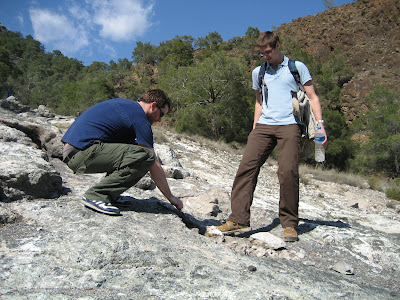
This afternoon we hitched a ride up to the top to explore the old city before slipping off our shoes and making our way precariously down the limestone. As we’re travelling in the “off season” we’ve been lucky to avoid big crowds at each of the sites we’ve visited, and Pamukkale is no different. In saying that, there was still a hoard of people dipping their feet into the shallow, calcium-rich pools. But Boyfriend decided we had to go one step further (pun intended), so we began to make our way barefoot down the 525-foot slope.


With no clear path and certainly no handrails I queried the level of safety of this, his latest challenge. But in the spirit of the gladiators and Who Dares Wins, I accepted. I learned fairly quickly that the soles of my feet are dainty, pretty things that do not take kindly to jagged edged limestone and an abundance of pebbles: my squeals and squeaks amusing Boyfriend greatly.

It’s clear that Boyfriend and I are a rare breed of a sadomasochistic couple.


* Top pic: 'Less than impressed' (Mission complete, now bend and tie your laces).

Intrepid traveller... Ephesus

Rejuvenated after a nice sleep-in, Boyfriend and I set off for the 3.5 kilometre walk from our hotel in Selçuk to the ruins of Ephesus – the best-preserved ancient Roman city of the Eastern Mediterranean.

We picked up Anna and Glen – a Kiwi couple from our tour group who’ve spent the past two years backpacking through Europe – and followed along the main road out of town. Only a few minutes had passed before we made a right-hand turn to stop at the ruins of the Temple of Artemis. Once one of the great Seven Wonders of the Ancient World, now sadly a bunch of broken marble and stone pillars. Apparently the Pyramids of Egypt are the last of the ancient Seven Wonders still predominately intact – luckily we’ll get a chance to see them in a few weeks.

The last standing relic at the Temple of Artemis
Anna and I in the amphitheatre at Ephesus
At Ephesus we decided, in the interest of saving our liras, to share one audio guide between the four of us. Anna and I each took an earpiece and attempted to relay the information to the boys. I came to the conclusion quite quickly that I would suck as a translator: stumbling over words as I repeated statements in English is a sad indication of my communication skills.

Two hours later we were still wandering the ruins. I think we were all surprised at how extensive they are. Ephesus was a great trading city in 1st century CE; it was also the centre if the cult of Cybele – the Anatolian fertility goddess – until Cybele became Artemis – the virgin goddess of the hunt and moon – and later Diana, when the Romans conquered the city. Later Ephesus was the site of Saint Paul’s famous speech to the pagans. The pagans retaliated with three hours of chanting, “Artemis is great,” and consequently Paul was thrown out of town.


The library of Celsus, Ephesus
Audio-guide weary, we took our leave when the remains of fountains and gymnasiums and latrines (it’s surprising how little the shape of a toilet seat has changed in two thousand years) all started to merge into one. Taking in the ancient world is a tiring task.

Tuesday, 17 February 2009

Intrepid traveller... Gallipoli and Troy

Yesterday we visited the site of the Gallipoli landings – 25 April 1915. It was freezing cold, with snow covering the hilltops and gravesites around Lone Pine, but our guide, Aykut, made the experience more than memorable.

A sturdy Turk no taller than me, with startling blue eyes and an inability to feel wind-chill, is one of those extraordinary people who can retain facts and stats on every subject from every era. His knowledge of Gallipoli and the reasons for the Allied attempt on the Dardanelles is extensive, while his knowledge of Australian and New Zealand politics and propaganda during WWI put all of us Aussies and Kiwis to shame.

The Australian Memorial at Lone Pine

What struck me most was how small the whole area was. The beach at ANZAC Cove is only a few metres deep, with the length of the shoreline only 3.5 kilometres. The 9-month campaign covered three areas of fighting at the southern tip of the European side of Turkey, to the left of the Dardanelle passage and on average each side incurred casualties of 1,000 men per day. That’s 500,000 men killed or injured in just over 250 days of fighting – and in the end, the Allies were evacuated. Their fight goes down in history, as the only military landing that did not achieve its final objective. And yet, the men that fought there, on both sides, were undoubtedly heroes. Today their children and grandchildren continue to march in their honour, while others make a pilgrimage to Gallipoli to help keep their spirits alive. Last year 9,000 Australian, New Zealand and British tourists came to celebrate ANZAC Day, along with 10,000 Turks. I honestly can’t imagine how they – not to mention the soldiers back in 1915 – all fit.

A statue of the Trojan Horse from the film, Troy (2004) - donated to Canakkale by Warner Bros.

From modern history to ancient times, this morning we drove from Canakkale (on the Asian side of the Dardanelles) to the ruins of Troy. Aykut proved himself, once again, the human-Encarta, reminding us of the story of Homer’s Iliad while linking the fiction to facts. Up until 2003 the actual site of Ancient Troy was a point of contention – with ruins in Sweden and London being put forward by some archaeologists – however, excavation began on this Turkish site in the late 19th century. With its key position at the gateway to the Dardanelle passage, the city of Troy was inhabited for over 4,000 years, with the oldest human remains dating back to 3,500BC. Today we saw the remnants of walls more than 5,000 years old, once standing 12 metres tall, now around 7 but still 6 metres thick.

The view across the plains of Troy (the Roman pillar a relic from the period post 1,000 BC)

When you’re standing amongst so much history its easy to get overwhelmed, and while I heard a lot of interesting facts today, the one stuck was Aykut’s story about the Trojan invention of doors and windows (circa 2,400BC). As a seaport used by the ancient civilisations, Troy sparked the imaginations of the Greeks and Egyptians who started poking holes in their homes in 2,200 and 2,100BC respectively. File that one for your next trivia night!